How many customers your shop holds
Customers in TCG Card Shop Simulator are counted rather than left to chance: the game keeps a maximum, a time per customer, and separate totals for the shop, the play tables and tournaments.
No confirmed picture from the game yet. This subject is kept as a note for now: the facts below are verified against the game's own files, but no image has been confirmed for it, so it is not published as a finished entry and is kept out of search engines.
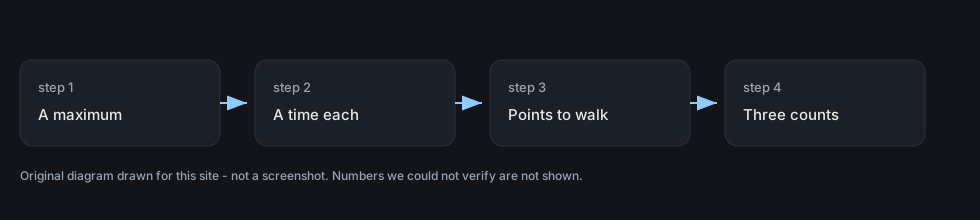
What the game establishes
- The manager keeps a maximum number of customers and a time per customer.
- The current count is tracked with separate totals for the shop, the play tables and tournaments.
- Tournament customers are kept in two lists, one of them sorted.
- The manager keeps an entrance point, a list of entrance points, a list of points inside the shop, exit points and points outside the windows.
- It keeps a list of what customers are aiming to buy.
- The same manager holds the trading state, the trade screen and the pairing screen.
- It holds the customer models it draws from and a parent group for them.
In play
Customers do not simply arrive until the screen fills. The game keeps a maximum number of customers and a time per customer, so how busy the shop is comes from numbers rather than from how long you have been playing.
The count is split three ways. There is a current total, a separate total for customers at the play tables and another for customers taking part in tournaments, which is why a shop full of players does not necessarily mean a shop full of shoppers.
Tournament customers are kept in lists of their own, one of them sorted. That is how a tournament can be paired up rather than dealt with as they wander in, and it is why the pairing has a screen behind it.
The shop knows where customers may come in. The manager keeps an entrance point, a list of entrance points, a list of points inside the shop, exit points and points outside the windows, so a customer arriving at a window is following a route rather than teleporting to a shelf.
It also keeps a list of what the customers are aiming to buy. That is a list of intended purchases rather than a record of what has been sold, which is why a customer can be seen deciding before anything is taken.
Customers have positions in the world rather than being part of a counter. There is a networked customer transform and a transform view for the characters who are not players, so a customer's place in the shop is something the game tracks for everyone.
The manager holds the trading state and the trade screen as well, along with the customer models it draws from, so trading and shopping are managed in the same place rather than being separate systems.
What this entry does not tell you: how many customers your shop may hold, how long each one takes, or how the totals are worked out. We have not verified those numbers, so we do not print them.