Cards and rarity · TCG Card Shop Simulator · read from a local copy
How a card front is built
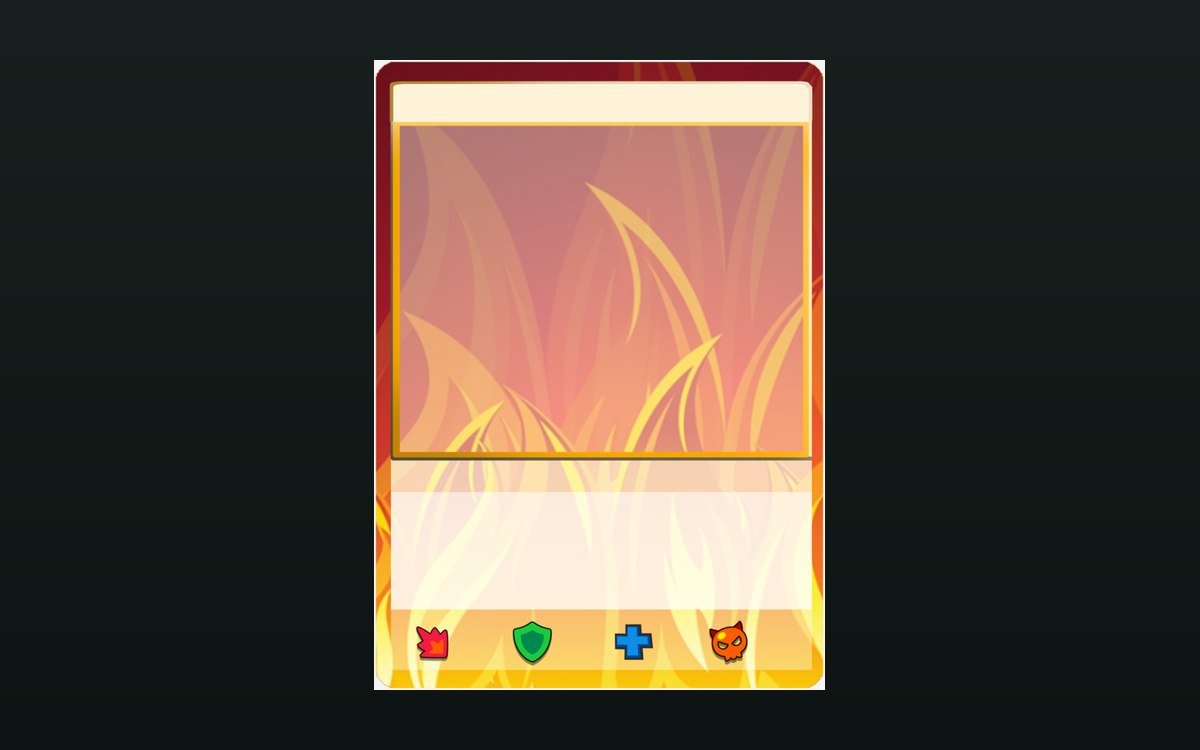
The game ships a card front for each element.
A card face in TCG Card Shop Simulator is assembled from parts: the game ships a front per element, full-art versions of the same, and versions with the background stripped out.
What the game establishes
- The game ships a card front for each element. (checked against the game's own files)
- The same elements have full-art fronts. (checked against the game's own files)
- Some fronts are shipped with the background removed. (checked against the game's own files)
- Fronts also exist for particular expansions. (checked against the game's own files)
- The finish is a separate piece from the face. (checked against the game's own files)
- A card back is shipped as its own mesh, with a material kept for it. (checked against the game's own files)
- Card backs are numbered as a set: the build names more than twenty of them. (checked against the game's own files)
- Some fronts are shipped as ghost fronts, in a black and a white version, beside a champion front. (checked against the game's own files)
- Card backgrounds are shipped per kind as well: a ghost background, a black ghost one, a ghost stat background and a champion background, with a transparent layering one beside them. (checked against the game's own files)
- Air and water backgrounds are named beside the ghost, champion and transparent ones. (checked against the game's own files)
- The card back is also drawn as its own picture, with the card game's name across it. (checked against the game's own files)
- The water element also carries a sleeve material and a card-front picture of its own. (checked against the game's own files)
In play
A card front is its own piece of artwork. The game ships fronts separately from the cards themselves, which is why the face you see is drawn rather than stored once per card.
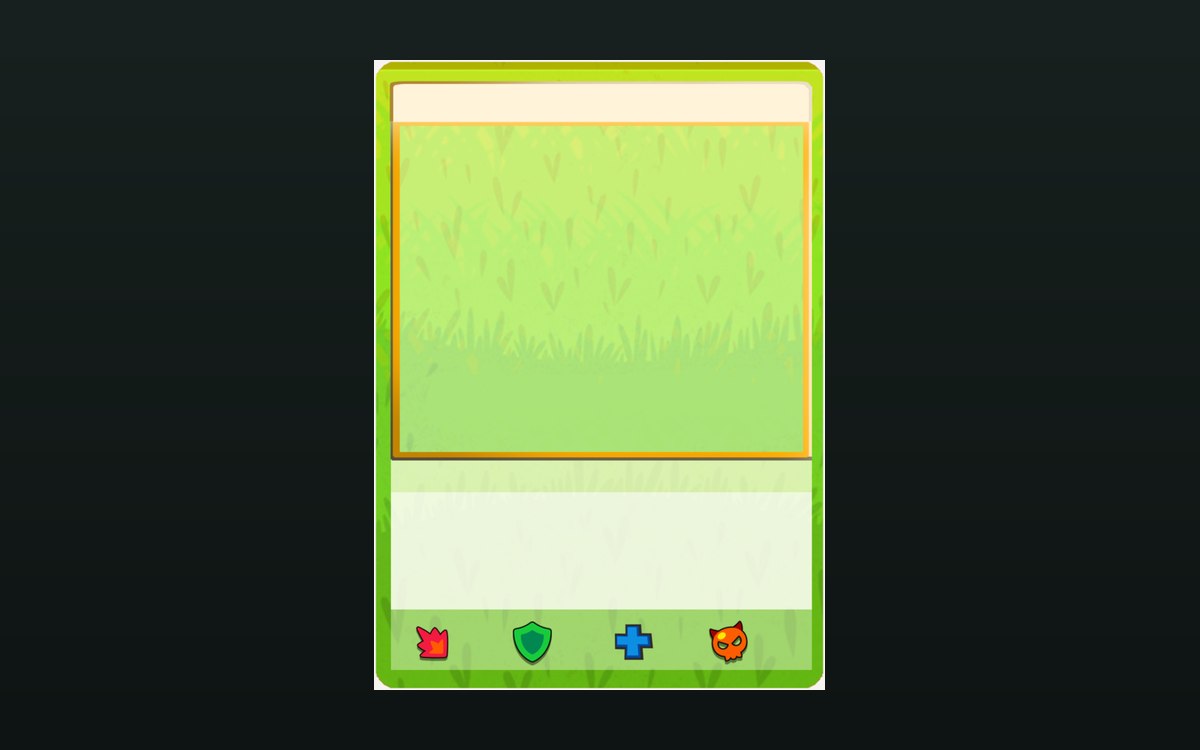
There is a front for each element. Air, fire, water and earth each have their own front, which is why an element is visible on the card rather than only mattering in the rules.
There are full-art versions as well. The same elements have full-art fronts, which is why a finish changes the whole face instead of only the border.
Some fronts come without a background. The game ships the same art with the background removed, which is why a front can be laid over something else rather than always being a rectangle.
The artwork is shared across sets too. The game has fronts named for particular expansions, so a set can bring a face of its own alongside its border.
The front and the finish are separate pieces. A card combines an element face with a border style rather than being a single image, which is why the two can be discussed independently.
What this entry does not tell you: how many fronts exist, what decides which one a card uses, or how a finish changes a card's value. We have not verified those, so we do not print them.
Related
 Cards and rarityCards and rarityA card is a physical object with its own display settings.
 Cards and rarityCard sets and expansionsCards are grouped into a fixed list of named expansions.
Version and sources
A local copy of the game, read only. Identifiers are listed on the technical reference pages; nothing here is estimated. Documented build: no version stated by this build.