Cards and rarity · TCG Card Shop Simulator · read from a local copy
The rules of the card game
The card game ships with a rulebook screen of its own.
The game inside TCG Card Shop Simulator has rules of its own: the game ships a rulebook screen, a mulligan, action resolution, element areas and a win or lose screen.
What the game establishes
- The card game ships with a rulebook screen of its own. (checked against the game's own files)
- The rulebook prints a play area diagram and a sample card. (checked against the game's own files)
- A game opens with a mulligan. (checked against the game's own files)
- Actions are resolved on screen, including choosing an element area, and cards show element damage. (checked against the game's own files)
- The board can be inspected and cards can be searched. (checked against the game's own files)
- A match ends with a win or lose screen and a closing conversation. (checked against the game's own files)
- Decks and the card pool are tracked by the game. (checked against the game's own files)
- The rulebook screen scrolls its pages with a slider of its own, with an offset amount, a maximum page index and a speed. (checked against the game's own files)
- The screen a match ends on carries separate lines for a win, a loss and a draw. (checked against the game's own files)
In play
The card game has a rulebook inside the game. The game ships a screen for the rules rather than leaving you to learn by losing, so the rules are content rather than something you look up outside it.
The rulebook moves by pages. Its screen has a slider with an offset amount, a maximum page index and a speed of its own, so the rules are turned through rather than scrolled as one long sheet.
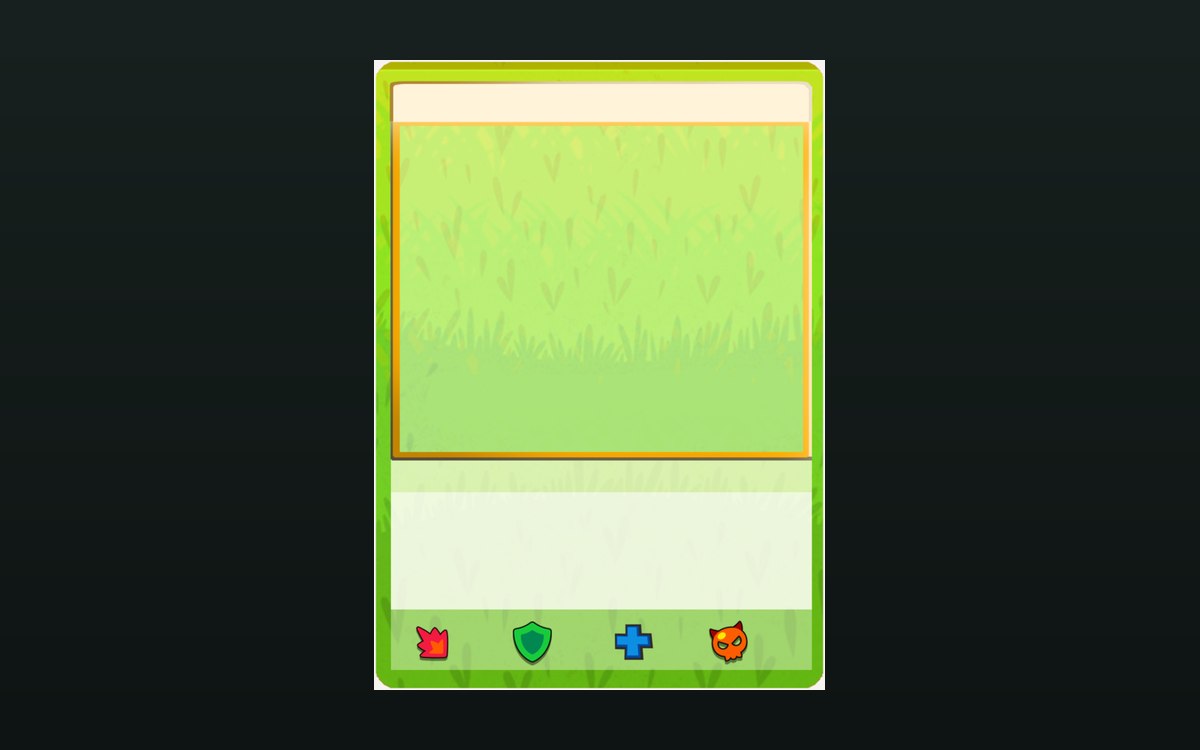
It prints its own play area. The rulebook includes a diagram of the play area and a sample card, which is why the layout is taught visually rather than only described in words.
A game opens with a mulligan. There is a screen for it, which is why the first decision you make is about your hand rather than about the board.
Actions are resolved on screen. The game has a screen for resolving an action and one for choosing an element area, so the steps of a turn are visible stages rather than automatic ones.
The board can be inspected. There is a screen for inspecting the board and one for searching your cards, which is why a game can be examined as well as played.
A finish is worded for what happened. The screen a match ends on keeps a line for a win, one for a loss and one for a draw, so the outcome is stated rather than left to be worked out from the board.
It ends with a stated result. There is a win-or-lose screen and an end-of-game conversation, so a match finishes with an outcome rather than simply stopping.
Cards do damage by element. The game keeps an element damage display, which is why a card's element matters in play and not only on the shelf.
What this entry does not tell you: the rules themselves, how many cards a deck holds, or how long a game takes. We have not verified those, so we do not print them.
Related
 Cards and rarityThe card game you can playPlayable card sets are defined by the game.
 Cards and rarityCards and rarityA card is a physical object with its own display settings.
Version and sources
A local copy of the game, read only. Identifiers are listed on the technical reference pages; nothing here is estimated. Documented build: no version stated by this build.