Customers and trading · TCG Card Shop Simulator · read from a local copy
The profile behind each customer
Each kind of customer has a profile of its own with a name, a kind and a rate at which it appears.
A customer in TCG Card Shop Simulator is set up before they walk in: the game gives each kind a profile with an appearance rate, a money range, how many items they want and how likely they are to buy a card.
What the game establishes
- Each kind of customer has a profile of its own with a name, a kind and a rate at which it appears. (checked against the game's own files)
- The profile sets a range of money the customer may carry and a maximum they will spend. (checked against the game's own files)
- The profile sets a range for how many items the customer wants, with percentages for how random that is. (checked against the game's own files)
- The profile sets how likely the customer is to buy a card, and a list of things they ignore. (checked against the game's own files)
- A customer inside the shop is saved as a record of their own, including their bag and what they have already taken. (checked against the game's own files)
- That record keeps what the customer has spent and what they owe for a play table. (checked against the game's own files)
- The game tracks whether a customer is smelly, with a meter of its own. (checked against the game's own files)
- Trading has its own record with the asking price, the market price and how many times a customer may decline. (checked against the game's own files)
- The manager keeps several customer models, including higher-detail ones, with lists of hair, eyebrows and body parts. (checked against the game's own files)
- The record keeps the prices of what is in the bag as well as the items, and what the customer is holding in each hand. (checked against the game's own files)
- It also keeps what the customer has gathered for a review, what they set out at a table, and their tournament data. (checked against the game's own files)
- The record carries the customer's state, whether they have played a game, whether they are inside the shop, and whether the customer count has been updated. (checked against the game's own files)
In play
A customer is not only a body walking towards a shelf. Each kind of customer has a profile of its own, and that profile decides how the customer behaves before they ever come through the door.
The profile carries a name, a kind and the rate at which that kind appears, so a rare customer is rare by design rather than by luck.
Money is a range rather than one figure. The profile sets the lowest and the highest amount a customer of that kind may carry, along with the most they are willing to spend, which is why two customers of the same kind can behave differently.
How many items they want is a range as well, with percentages for how random their choice is. A profile can therefore be made predictable for one kind of customer and erratic for another.
The profile also decides how likely a customer is to buy a card, and it can carry a list of the things that customer will ignore, which is how a kind of customer is steered towards one part of the shop.
Once a customer is inside, the game saves them as a record of their own: where they are standing, what is in their bag, what they have already taken from a shelf, whether they have checked out, and what they owe for using a play table.
That record also notes whether the customer is smelly, with a meter kept for it, so being smelly is a state the game tracks rather than only a joke about a shop.
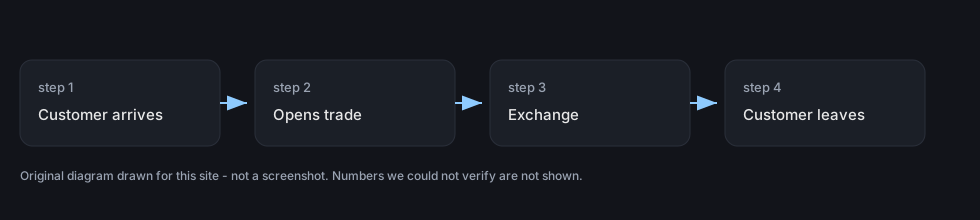
Trading has a record of its own. It holds whether a trade is going on, the price being asked, the market price it is measured against, and how many times the customer may decline before the trade is over.
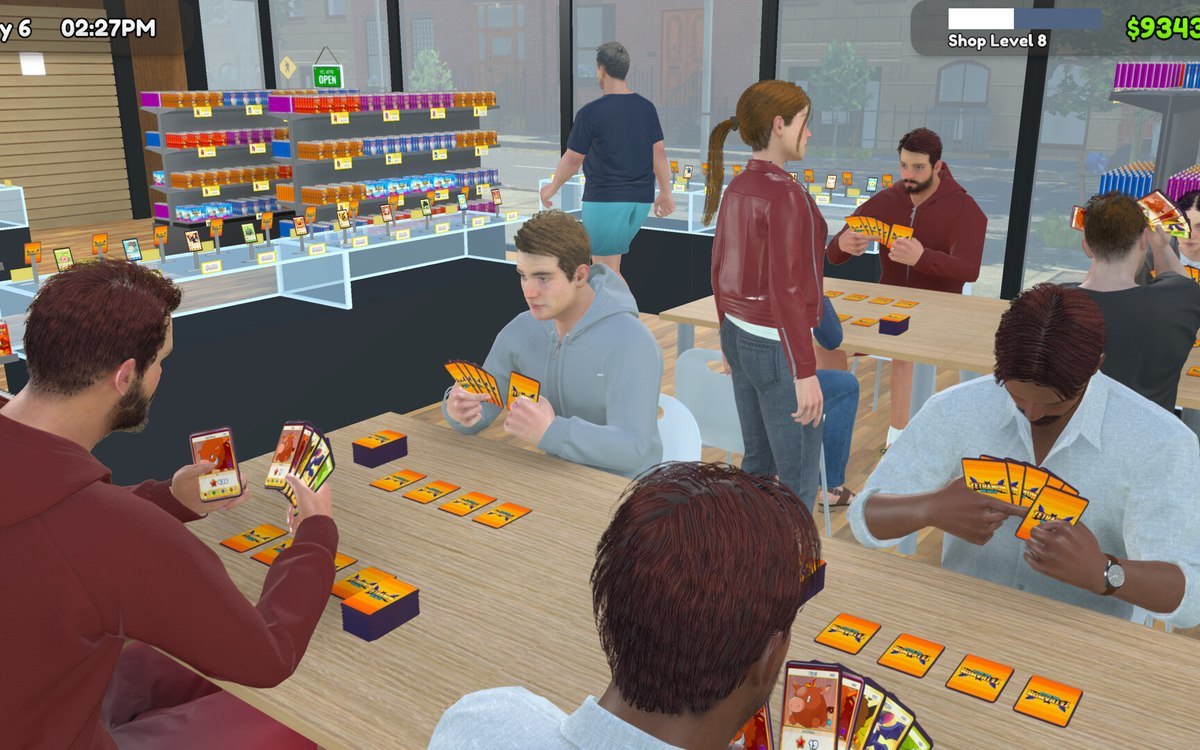
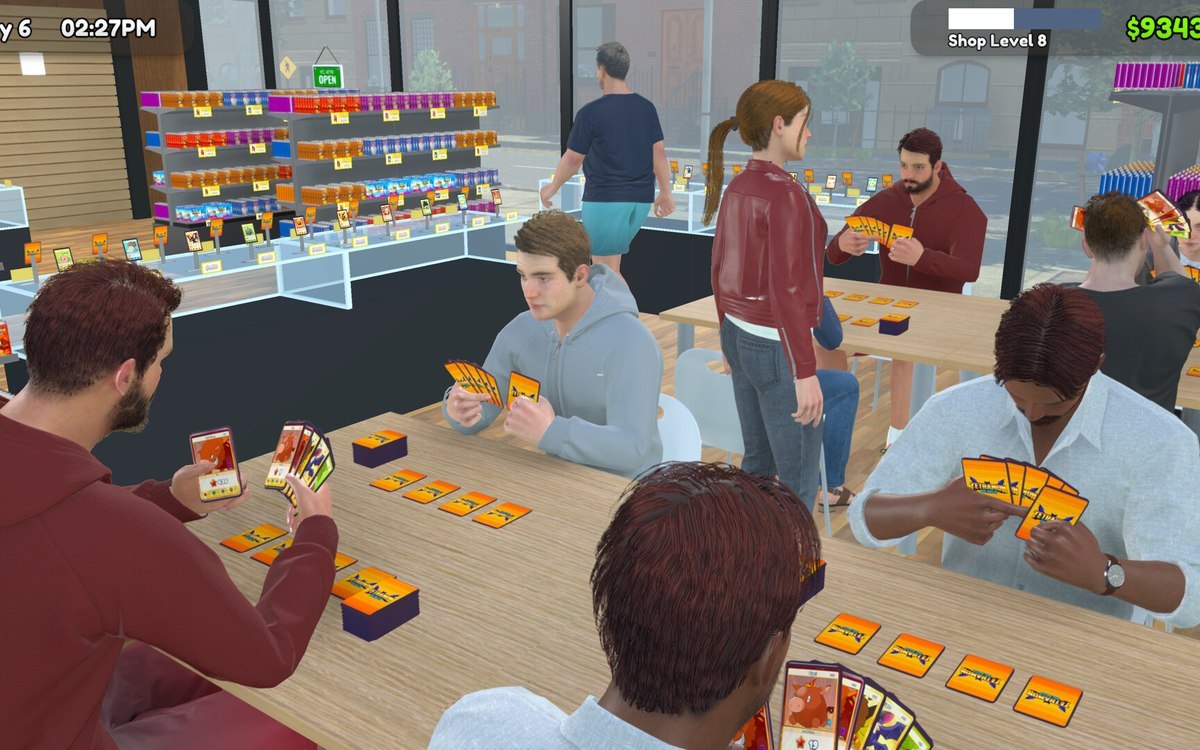
The portraits beside this entry are the game's own: two of the customer pictures it ships.
What this entry does not tell you: the numbers inside any profile, how many profiles there are, or how the game picks one. We have not verified those, so we do not print them.
Related
 Customers and tradingThe kinds of customers you getCustomers come in a fixed list of kinds.
 Customers and tradingTrading with customersTrading with a customer has its own screen in the game.
Version and sources
A local copy of the game, read only. The grounding for each fact is listed on the technical reference pages; nothing here is estimated. Documented build: no version stated by this build.