Customers and trading · TCG Card Shop Simulator · read from a local copy
What a customer carries and how it moves
A customer follows a path with a seeker and a start-and-end modifier, at its own speed, waypoint distance, repath rate and rotation lerp.
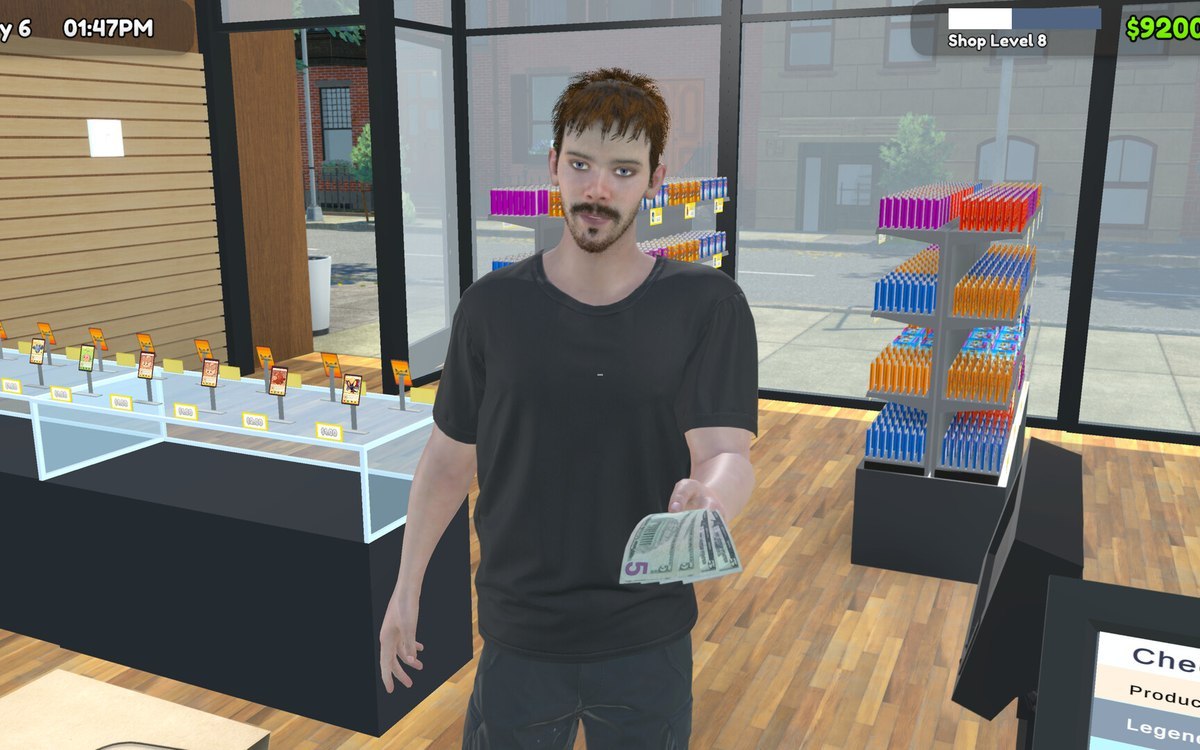
A customer in TCG Card Shop Simulator is an object with parts of its own: a seeker that walks a path at its own speed, a shopping bag and cash that hang from set points, lists of the items and cards it is carrying, places for prizes, a budget it spends against, and its own appearance and effects.
What the game establishes
- A customer follows a path with a seeker and a start-and-end modifier, at its own speed, waypoint distance, repath rate and rotation lerp. (checked against the game's own files)
- A shopping bag and customer cash hang from parent points of their own. (checked against the game's own files)
- The items in the bag and the cards in the bag are kept in separate lists. (checked against the game's own files)
- There are prize locations for a big item, an item and a card, each with a swapped version. (checked against the game's own files)
- A customer has its own customisation, animator, female flag and mesh group. (checked against the game's own files)
- It carries a card fan-out and a single card prop for playing. (checked against the game's own files)
- It has separate effects for being smelly and for being clean. (checked against the game's own files)
- It has an exclamation mesh and a collider for being interacted with. (checked against the game's own files)
- It looks at a target and has a target transform of its own. (checked against the game's own files)
- It keeps a running cost total, a maximum it will spend and the list of items it means to buy. (checked against the game's own files)
- It gathers its own review data, carries a customer state and knows whether it is active. (checked against the game's own files)
- The game ships the paper bag its customers carry, in a closed and an open form. (checked against the game's own files)
- The build keeps a randomiser for the card fan, working from lists of fan groups, play mats and renderers. (checked against the game's own files)
- The effects come with a sheet of customer emotes of the build's own, an exclamation mark and a heart among the faces on it. (checked against the game's own files)
In play
A customer is an object rather than a number walking about. It moves by following a path, with a seeker and a start-and-end modifier behind it, and it carries a speed and a repath rate of its own, which is why two customers can cross the shop at different paces.
It also turns at its own rate. There is a lerp for its rotation, so a customer swings towards where it is going rather than snapping to face it.
It carries things on its body. A shopping bag and a sum of cash are both attached to parent points, which is why what a customer holds appears in the right place rather than floating beside it.
The bag is the game's own art. The build ships the paper bag its customers carry, in a closed and an open form, so what hangs from that parent point is the game's own object rather than a stand-in.
What it has picked up is kept in lists. The items in its bag and the cards in its bag are tracked separately, so a customer can be carrying tins and cards at once and the game still knows which is which.
It has places to put a prize. There are separate locations for a big item, an ordinary item and a card, each with a second version for when the positions are swapped, which is how a winner's goods end up in their hands rather than on the floor.
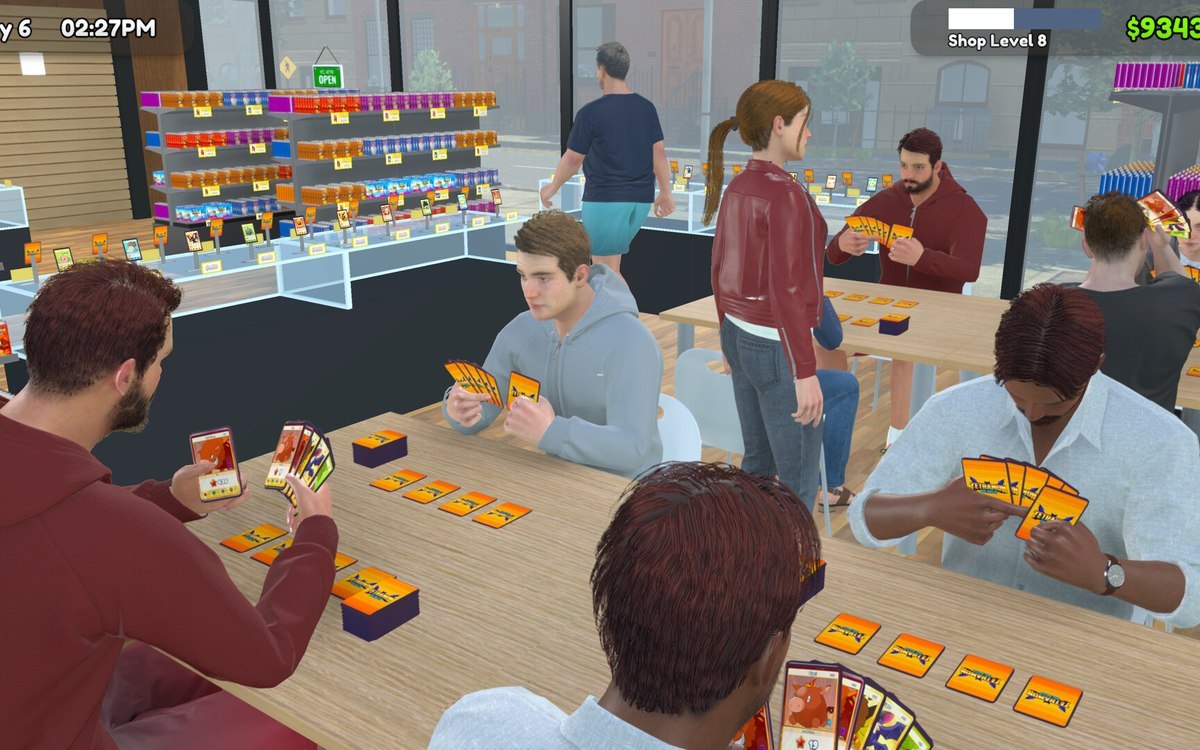
Its appearance is its own. A customer has a character customisation and an animator, a flag for whether it is female and a mesh group of its own, which is why the shop's crowd is varied rather than one model repeated.
It is dressed for the moment. There are effects for being smelly and for being clean, so a customer's condition can be seen as well as recorded, and there is an exclamation shape for when it has something to draw your attention to.
It has a collider for being interacted with and a target for looking at the player, which is how a customer can notice you and how you can serve one.
It shops to a budget. There is a running total of what it is spending, a maximum it is willing to spend, and the list of things it intends to buy, so a customer's decisions come from a stated amount rather than from a mood.
It also gathers what it will say about you. A customer collects review data of its own, carries a state from the game's set of customer states, and knows whether it is active at all.
The cards in its hands are drawn from a set. There is a randomiser for the fan, working from lists of fan groups, play mats and renderers, which is why a customer's hand is assembled rather than being one fixed arrangement.
What this entry does not tell you: how much a customer will spend, how many reviews it leaves, or how its path is chosen. We have not verified those numbers, so we do not print them.
Related
 Customers and tradingThe kinds of customers you getCustomers come in a fixed list of kinds.
 Customers and tradingCustomer reviews and how a day is judgedCustomer reviews are managed by the game.
Version and sources
A local copy of the game, read only. The grounding for each fact is listed on the technical reference pages; nothing here is estimated. Documented build: no version stated by this build.