Guide
Following a customer from the door
What a customer in TCG Card Shop Simulator is doing between the door and the counter: it walks a path of its own, wears the bag and the cash the game gives it, and shops to a budget it keeps.
Applies to
no version stated by this build (see the sources page)
Before you start
- A shop open for trading
- The trade screen within reach
- A shelf that is stocked enough for a customer to find something
Steps
- Expect a customer to arrive along a path rather than to wander in.
a customer follows a path with a seeker and a start-and-end modifier - Read two customers crossing the shop at different paces as a speed each of them keeps.
a customer keeps a move speed, a speed, a waypoint distance, a repath rate and a rotation lerp - Look at what a customer is holding, because the bag and the cash are attached to it rather than carried in code.
the shopping bag and the customer's cash hang from parent points of their own - Remember that a customer can be carrying tins and cards at the same time.
the items in the bag and the cards in the bag are kept in separate lists - Expect a winner's goods to be placed rather than dropped.
there are prize locations for a big item, an item and a card, each with a swapped version - Judge what a customer will spend by the total it is keeping rather than by a mood.
a customer keeps a running cost total, a maximum it will spend and the list of items it means to buy - Notice whether a customer is smelly or clean, because each of those has an effect of its own.
there are separate effects for being smelly and for being clean - Expect a customer to notice you, because it has something to look at you with.
a customer carries a collider for being interacted with and a target to look at
Common mistakes
- Blocking the path a customer is walking instead of stepping aside.
- Assuming a customer's bag holds only cards when it keeps items and cards in separate lists.
- Reading a customer's mood as its budget when the budget is a total it keeps.
- Forgetting that a customer can be watching you while you work.
Related entries
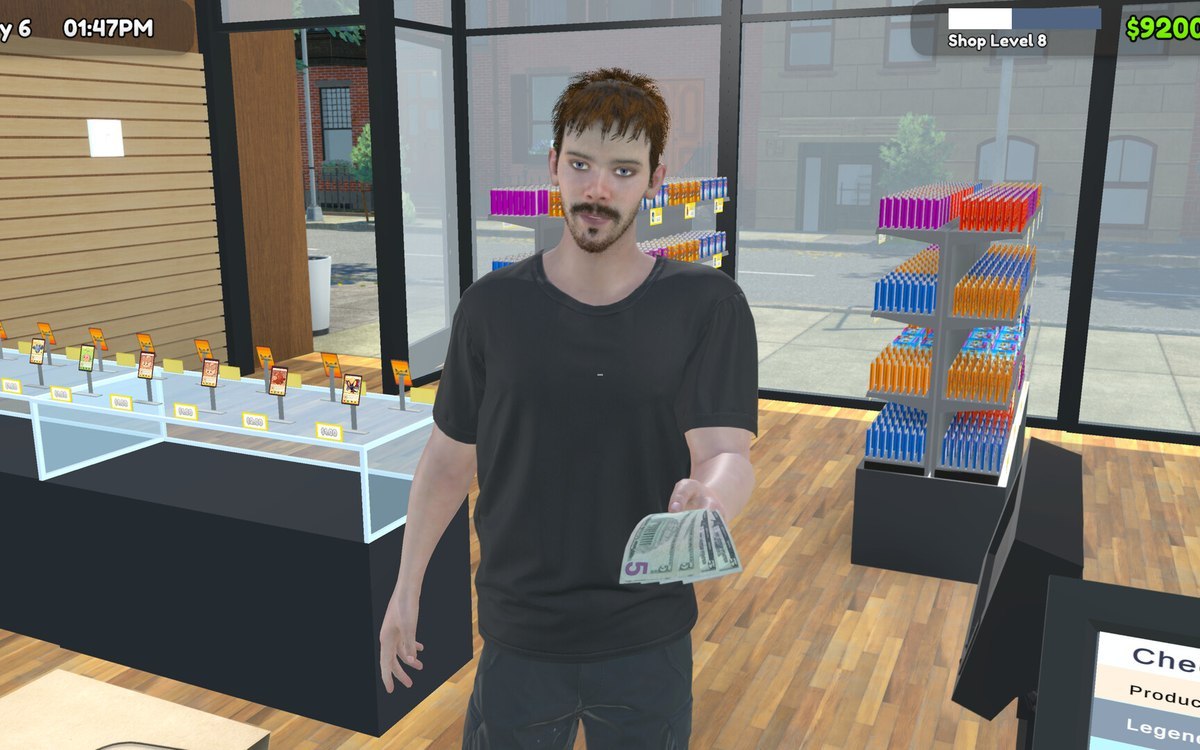 Customers and tradingWhat a customer carries and how it movesA customer follows a path with a seeker and a start-and-end modifier, at its own speed, waypoint distance, repath rate and rotation lerp.
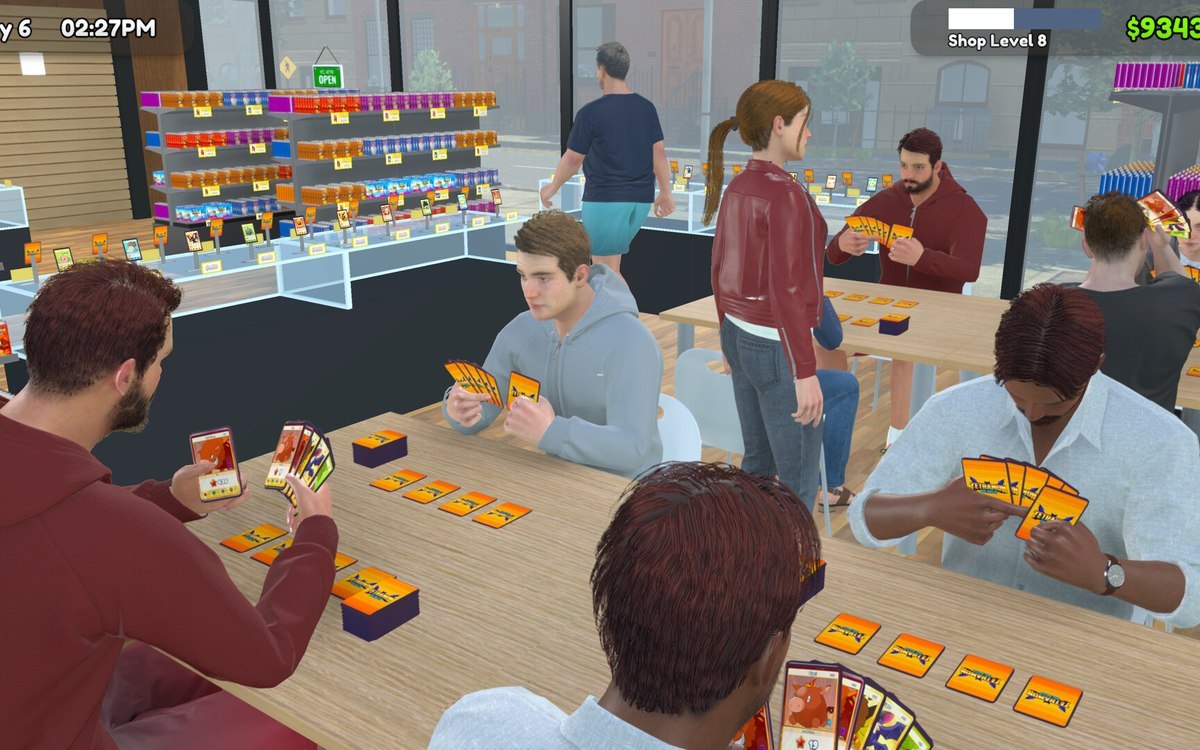 Customers and tradingThe kinds of customers you getCustomers come in a fixed list of kinds.
 Shop, shelves and fixturesThe payment a customer hands overThe payment a customer hands over is an object of its own, and it knows whether it is a card.
Sources
A local copy of the game, read only. Grounding for each step is on the technical reference pages; no number is estimated.