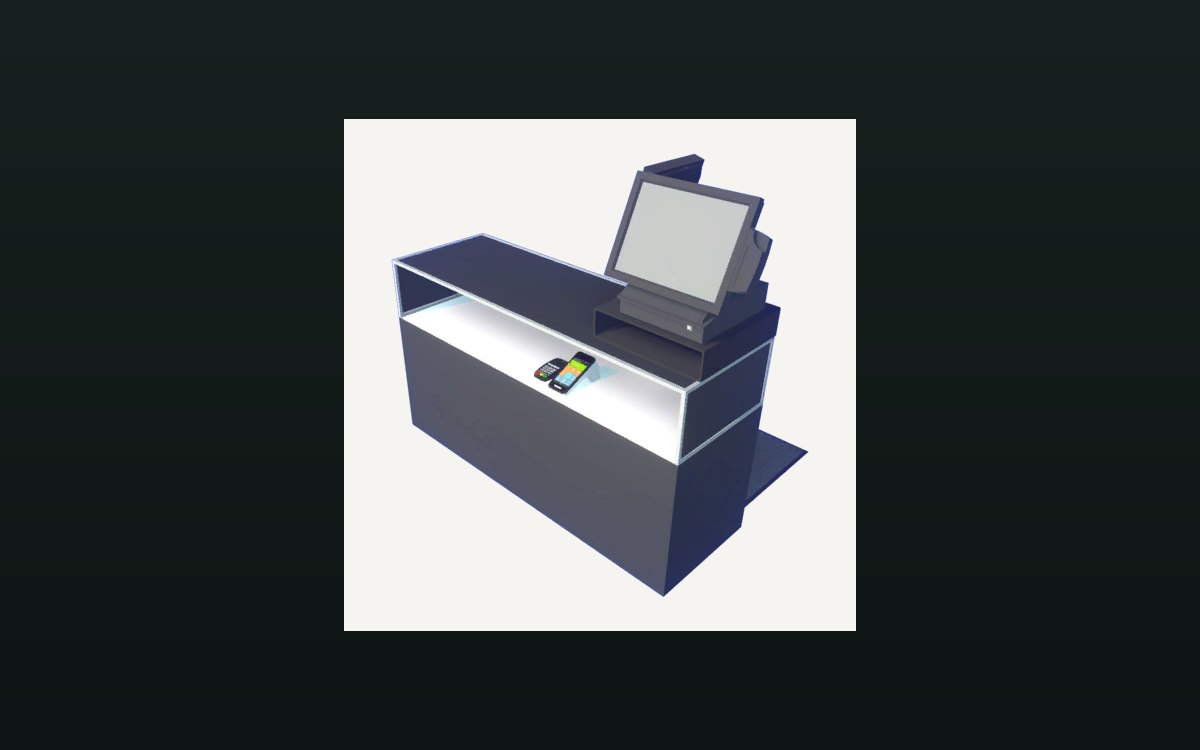
Shop, shelves and fixtures · TCG Card Shop Simulator · read from a local copy
The counter and money handling
A cash change at the counter is its own interaction.
Money in TCG Card Shop Simulator changes hands at the counter: the game treats a cash change as an interaction with its own currency data and its own counter settings.
What the game establishes
- A cash change at the counter is its own interaction. (checked against the game's own files)
- Currency is defined as data in the game. (checked against the game's own files)
- The counter has its own settings screen. (checked against the game's own files)
- The game ships a counter sign of its own for a counter that is closed. (checked against the game's own files)
- The till has its own drawer objects for opening and closing, and the counter keeps its money guides as a group. (checked against the game's own files)
- The checkout register has an open state of its own, with a sound effect for it. (checked against the game's own files)
- Pressing a card at the counter and finishing the sale each have a sound of their own. (checked against the game's own files)
- Scanning an item, opening the register and finalising a card each have a sound of their own, several of them with a pad version beside them. (checked against the game's own files)
- A customer buying, a declined payment and a damaged card each have a sound of their own. (checked against the game's own files)
In play
Handing over change is an interaction in the world rather than a silent arithmetic step, which is why the counter is somewhere you stand.
Currency data has its own place in that system, so the money you handle is defined rather than drawn from a fixed number.
The counter keeps settings of its own, which is why a busy counter can be configured instead of merely being staffed.
What this entry does not tell you: exchange rates, how much change is available or how a mistake affects a customer. We have not verified those numbers, so we do not print them.
Related
 Pricing and the marketPrices and price tagsPrice tags are their own objects attached to goods.
 Customers and tradingTrading with customersTrading with a customer has its own screen in the game.
 Shop, shelves and fixturesThe money the counter handlesA piece of money at the counter can be a coin or a note, and it carries that on the object.
Version and sources
A local copy of the game, read only. The grounding for each fact is listed on the technical reference pages; nothing here is estimated. Documented build: no version stated by this build.